




Obscenity and Decency Laws — What Can Get You Prosecuted

Obscenity laws, the Miller test, decency standards, and real cases that show where the legal lines are in adult production. What content types are legally risky and how to protect yourself.

Character

Most adult content is legal. That's the good news. But the line between protected expression and criminal obscenity isn't as clear as you'd hope, and the consequences for crossing it are severe — federal prison, sex offender registration, and the complete destruction of your business. Understanding where the line is, how courts decide what's obscene, and what happened to producers who crossed it isn't just interesting legal trivia. It's information that could keep you out of prison.

Obscenity Laws and Decency Standards

What obscenity and decency laws apply to adult video production?

The Miller Test — How Courts Define Obscenity

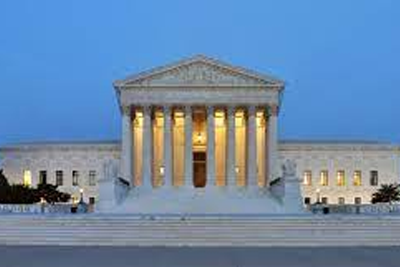
The legal standard for obscenity in the United States comes from the 1973 Supreme Court case Miller v. California. The court established a three-part test that's still used today. All three prongs must be met for something to be legally obscene:

Porn Legal Issues
Pornsite Law GDP

Pornsite Law GDP

    The average person, applying contemporary community standards, would find that the work, taken as a whole, appeals to prurient interest — "Prurient interest" means an unhealthy, shameful, or morbid interest in sex. Standard adult pornography between consenting adults generally doesn't meet this prong because community standards have shifted dramatically since 1973. Courts have consistently found that mainstream adult content, while sexual, doesn't rise to "prurient" in most American communities today. The work depicts or describes sexual conduct in a patently offensive way, as defined by applicable state law — "Patently offensive" is the key phrase. Standard adult content between consenting adults — even explicit content — generally isn't considered "patently offensive" under modern standards. What pushes content into this category is extreme or degrading content that goes beyond what the community is willing to tolerate. The work, taken as a whole, lacks serious literary, artistic, political, or scientific value — This is the "SLAPS" test. Content that has any serious value in these categories is protected even if it's sexually explicit. This prong protects educational content, artistic expression, and documentaries that include sexual material.

The critical thing to understand: "community standards" means the community where the prosecution happens, not where you are. Content that's perfectly acceptable in Los Angeles might be found obscene by a jury in a conservative rural county. Federal prosecutors have historically used this to their advantage by filing charges in jurisdictions with the most conservative standards.

What Content Is Actually Risky

Standard adult content between consenting adults — even very explicit content — is overwhelmingly unlikely to result in obscenity prosecution in 2025. Prosecutorial resources are limited and public attitudes toward pornography have liberalized significantly. But certain content types carry substantially higher legal risk:

    Extreme content that depicts violence or degradation — Content that combines sex with graphic violence, simulated non-consent presented as real, or extreme degradation pushes into the "patently offensive" territory. The more extreme the content, the higher the risk. Content involving bodily fluids/waste — Certain fetish content involving waste products has been specifically targeted by federal prosecutors. The Max Hardcore case (below) is the key precedent here. Simulated underage depictions — Even with adult performers, content that deliberately presents performers as minors (school uniforms, "barely legal" framing taken to extremes, age-play with infantilizing elements) is legally dangerous. Federal law prohibits visual depictions that appear to be minors engaged in sexual conduct, regardless of the performers' actual age. Non-consensual distribution and hidden camera content — Recording or distributing intimate content without consent is criminal in most jurisdictions, separate from obscenity law. Hidden camera content or "revenge porn" falls under specific state criminal statutes.

Real Cases That Define the Lines

Max Hardcore (Paul Little) — Federal Obscenity Conviction

Max Hardcore
Adult Website Lawyer

Uh oh...This cowboy probably should have consulted his attorney.

Paul Little, known as Max Hardcore, was a prolific producer of extreme adult content. In 2008, he was convicted on 10 federal obscenity charges in the Middle District of Florida and sentenced to 46 months in federal prison plus three years of supervised release.

What happened: Federal prosecutors charged Little under federal obscenity statutes for distributing content through the mail and internet that depicted extreme sexual acts including simulated violence, degradation, and content involving bodily waste. The prosecution was filed in Tampa, Florida — not Los Angeles where the content was produced — because community standards in Tampa were more conservative.

The lesson: The government chose its jurisdiction strategically. Content that might have survived a jury trial in LA was found obscene in Florida. The case established that even content produced legally in one jurisdiction can be prosecuted in any jurisdiction where it's distributed — and if you distribute via the internet, that's everywhere.

GirlsDoPorn — Fraud, Trafficking, and the Limits of "Consent"

Girlsdoporn
Adult Content Legal Issues MaxHardcore

Adult Content Legal Issues MaxHardcore

GirlsDoPorn wasn't technically an obscenity case, but it's one of the most important legal cases in modern adult production because of what it revealed about consent and fraud in the industry.

What happened: The operators of GirlsDoPorn recruited women under false pretenses — promising the content would not be distributed online, would only go to private collections or DVDs for overseas markets, and would remain anonymous. None of this was true. The content was distributed widely online. The principal operator, Michael Pratt, was charged with sex trafficking and fraud. Co-conspirators received sentences ranging from probation to 20 years in prison. Pratt became an FBI fugitive and was captured in Spain in 2025.

The lesson: Consent obtained through deception is not consent. This case dramatically raised scrutiny of how performers are recruited and informed about content distribution. It's also why proper consent documentation that accurately describes how content will be used is not just good practice — it's your legal protection against fraud and trafficking charges.

The Cambria List — Industry Self-Regulation

Attorney Paul Cambria, who has represented adult industry clients for decades, compiled what's known as the "Cambria List" — a set of content guidelines that adult producers follow to minimize obscenity prosecution risk. While not legally binding, the list represents the industry's consensus on what content types are most likely to draw prosecutorial attention.

The list includes specific acts and depictions that Cambria advises producers to avoid. Most major studios and distributors follow these guidelines, and many payment processors incorporate similar restrictions into their acceptable use policies. If your processor tells you certain content types are prohibited, the Cambria List is usually why.

State Laws and Emerging Regulations

Beyond federal obscenity law, states have their own regulations that affect adult production:

    Age verification laws — As of 2025, over 19 states have passed laws requiring adult websites to verify user age. These laws create additional compliance obligations for site operators and carry civil and criminal penalties for non-compliance. Revenge porn / non-consensual distribution laws — Nearly all states now have laws criminalizing the distribution of intimate images without consent. If you're distributing content, you need documented consent that specifically covers the distribution channels you're using. California AB 2655 and performer protections — California has the most developed framework for adult performer protections, including workplace safety standards enforced by Cal/OSHA. Other states are following California's lead with their own performer protection legislation. Deepfake and AI-generated content laws — An emerging area of regulation. Several states have passed or are considering laws specifically targeting AI-generated sexual imagery, particularly non-consensual deepfakes. If you're using AI tools in production, understand the legal landscape in your jurisdiction.

Protecting Yourself

Practical steps to minimize legal risk:

    Stay away from content categories that draw prosecutorial attention — The Cambria List exists for a reason. Follow it. Know your payment processor's content restrictions — Processors have their own prohibited content lists. Violating them gets you dropped, which is a business death sentence. Maintain meticulous 2257 records — Age verification and record-keeping compliance is your first line of legal defense. Get real consent with accurate disclosure — Your consent forms must accurately describe what performers are consenting to and where the content will be distributed. Deceptive consent is worse than no consent. Consult an adult industry attorney — If you're pushing boundaries or unsure about a content type, spend the money on a consultation with an attorney who specializes in adult industry law. Not a general entertainment lawyer — someone who knows this specific area. The Free Speech Coalition maintains a list of industry attorneys. Understand that the internet has no geographic boundaries — If you publish online, you're distributing to every jurisdiction in the country. The Max Hardcore case proved this. Content standards in your local community don't protect you from prosecution elsewhere.

The legal landscape for adult content continues to evolve. Age verification mandates, AI regulation, and performer protection laws are all active areas of legislation. Staying informed isn't optional — it's part of running a legitimate adult business.

Checklist

  • Checkmark
    Consult an adult industry attorney before producing any content that pushes boundaries legal counsel, attorney, Free Speech Coalition, risk assessment
  • Checkmark
    Ensure all consent documentation accurately describes how and where content will be distributed consent, disclosure, distribution, fraud prevention, GirlsDoPorn
  • Checkmark
    Follow the Cambria List guidelines for content types to avoid Cambria List, content guidelines, self-regulation, risk reduction
  • Checkmark
    Know your payment processor's content restrictions and stay within them processor restrictions, acceptable use, content policy, compliance
  • Checkmark
    Learn the three prongs of the Miller test and understand how community standards affect your risk Miller test, obscenity, community standards, legal knowledge, prosecution
  • Checkmark
    Maintain meticulous 2257 records as your first line of legal defense 2257, record keeping, age verification, legal protection, compliance
  • Checkmark
    Monitor emerging AI and deepfake regulations that may affect your production methods AI regulation, deepfakes, emerging law, technology, compliance
  • Checkmark
    Stay current on age verification laws in states where your audience is located age verification, state laws, compliance, 2025 legislation, regulation