

AI Porn Content: How to Make Images, Video and Text That Sell

How to make AI porn that sells: pick a model that allows adult work, keep one performer's face the same in every shot, make images and video, and cut the slop.

AI Porn Content: How to Make Images, Video and Text That Sell - Make A Porn Site

Short answer: the big-name AI tools ban porn, so you run open models on a graphics card you own or rent. You design each performer on paper, lock her face with a small training file called a LoRA, make content in sets, throw away most of what you generate, and put a person between the model and the publish button. Everything below is how. The AI overview links the pages on cost, marketing, design, law and payments.

Adding AI to the content you already have

How do I use AI on a site that already has real scenes?

Video Editing
Adult Content Editing

Adult Content Editing

Use it on the parts around the scene, not on the performers. That keeps you clear of the deepfake laws and still gives you most of the payoff.

What works on a site with real scenes:

  • Upscaling the back catalog. AI upscalers can lift old 480p and 720p scenes to something watchable on a big screen. Run one scene, watch it on a TV, and look at faces and skin. If they look waxy, turn the strength down. Do not promise 4K on a scene that was upscaled.
  • Thumbnails and previews. Frame picking tools find the sharp, well lit frames in a scene. That is worth more than it sounds, because the thumbnail is the whole sales pitch on a tube page or a join page.
  • Scene text. Titles, descriptions, tags, and the short blurbs on category pages. Give the model the scene's facts, get a draft, then rewrite it in your own voice. Never publish the first draft. Models repeat themselves, and Google's own raters are told to give the lowest rating to pages that are mostly AI text with nothing added.
  • Translation. If you sell to more than one country, a language model translates scene text well enough for tags and descriptions. Have a native speaker check the join page and the billing pages, because a wrong word on a price is a chargeback.
  • Member chat. A chatbot that answers as a performer keeps members around. It must be clearly labeled as AI, it must never claim to be the real person, and it must never talk to anyone under 18. If you do not know how to guarantee that last one, skip it.
  • Voice. Open voice models can read a script in a consistent voice for trailers and promos. Do not clone a real performer's voice without a signed license that says exactly that.

What does not work: making new sexual images of your real performers with AI. Your model release covers the scene you shot. It does not cover a synthetic version of that person in a scene they never did. Federal law now treats that as a nonconsensual image of a real person, and the platforms and card networks treat it the same way. The AI Legal page goes through it.

Your record keeping does not change. Every real performer still needs the 2257 records, upscaled or not.
Building a full AI site from nothing

How do I make a porn site where every performer is AI?

You build a small roster of made-up performers, teach the model each one's face, and then produce content for them on a schedule, the same way a studio would with real talent. The site itself is the easy part.

Step 1: design the performers on paper first

Write a one page sheet for each one before you generate anything: age (write it down, and make it clearly adult), face shape, hair, skin tone, build, tattoos, the clothes she wears, the rooms she is in, and the kind of person she is. Five to ten performers is plenty to start. Our guide to creating an AI performer covers the face and body details, and the phenotype guide explains how to describe skin and features so the model gives you a specific person instead of a generic one.

Step 2: lock the face

Generate until you get one image that matches the sheet. Then make 20 to 40 more images of that same face from different angles and in different light, pick the best 15 to 25, and train a LoRA on them. A LoRA is a small add-on file that teaches the base model one specific person. From then on you call the LoRA and get that face back. Without this step every image is a different woman, and customers notice immediately.

Step 3: produce in sets

Real paysites sell sets, not single pictures. Make each set one outfit, one location, one mood, 20 to 60 images. Generate three or four times what you need and keep the best. Then add short video clips, five to ten seconds each, made from your best stills with an open video model. Clips take far longer to generate than images and fail more often, so start with a few per set.

Step 4: give her a voice

A bio, captions in a consistent voice, and if you run chat, a personality file for the chatbot. This is what turns a folder of images into a performer people subscribe to. Write it yourself or edit the model's draft hard. Generic captions are the fastest way to look like every other AI site.

Step 5: publish on a schedule

Weekly updates beat one big launch. The business model guide compares subscriptions, per-set sales, tokens and custom requests, and the tech stack guide compares the ways to build the site around all of this.

Two hard rules from the start: every performer looks clearly adult in every image, and no performer's face comes from a real person. Both are covered on the AI Legal page, and both will come up when a payment processor reviews you.

Choosing a model and where to run it

Which AI models allow porn, and where do I run them?

Editor GPU
Adult Content Digital editing

Adult Content Digital editing

Almost none of the well known hosted tools allow it, so you will run open models yourself. That is the single fact that shapes everything else on this page.

The hosted tools say no

Google's generative AI policy bans content made "for the purpose of pornography or sexual gratification." Midjourney bans nudity and sexualized imagery. Leonardo bans explicit pornography. Ideogram, Runway, Kling and Stability AI all ban sexually explicit output in their terms. OpenAI announced an adults-only mode in late 2025 and then shelved it in March 2026. Trying to sneak explicit prompts past the filters gets the account banned, and the account is often tied to your business email and card. Use these tools for the safe-for-work parts of the job only. The AI Design page lists what they are good for.

Open models say nothing, and that is the point

Open-weight models are files you download and run. There is no content filter unless you add one. The ones people use for adult work:

  • Images. Stable Diffusion XL and the many adult-tuned versions of it built by the community are the workhorses, because thousands of LoRAs exist for them. The original Stable Diffusion license allows commercial use and says nothing about adult content. FLUX gives better hands and text but check the license: FLUX.1 schnell is Apache 2.0 and free for commercial use, while FLUX.1 dev is licensed for non-commercial use of the model, even though the images it makes can be sold.
  • Video. Open video models can turn a still image into a short clip. They need a lot of graphics memory, they are slow, and most clips fail. Plan on many tries per usable clip.
  • Text. Open language models run locally with no filter, for captions, bios and chat. They are weaker than the big hosted models, so keep the jobs small and edit the output.
  • Voice. Open text-to-speech models can read scripts in a consistent voice. Never clone a real person without a written license.

Where to run them

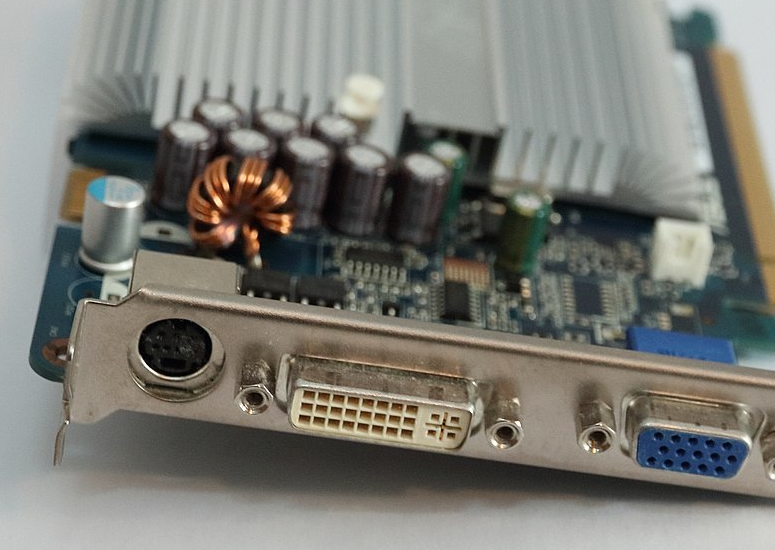
You need a graphics card with a lot of memory, and the more the better. You can buy one and run it at home, or rent one by the hour from a GPU cloud. A workflow tool like ComfyUI lets you chain the steps: generate, fix the face, upscale, crop. The AI Budgeting page compares owning against renting with current prices.

A few hosting and API companies do serve open models with adult content allowed. Read the terms yourself before you build on one, and read them again every few months. Policies in this space change without notice, and a change can take your whole pipeline down.

Don't ship slop

How do I keep AI porn from looking fake?

Played Out
Pornsite talent WornOut

Pornsite talent WornOut

By deciding that most of what you generate is trash, and acting like it. The model is cheap. Your reputation is not.

What slop looks like

Customers spot it in a second, so learn to spot it in a second too:

  • Wrong hands: six fingers, two thumbs, fingers that bend the wrong way.
  • Melted details: earrings that blend into hair, a bra strap that turns into skin, tattoos that change between images.
  • Plastic skin with no pores, and the same soft studio glow on every image.
  • Text on clothing or signs that is gibberish.
  • Backgrounds that do not make sense: a door in the middle of a wall, a bed with three legs.
  • The same face on every performer, or a performer whose face drifts from image to image.
  • Captions that all start "Get ready for" and end with three emojis.

The process that stops it

  • Write the spec before you generate. Framing, outfit, room, light, pose, expression. If you cannot write down what a correct image looks like, you cannot check one.
  • Make four to eight, keep one. Pick the best, discard the rest. If none pass, change the prompt or the model, do not just keep rolling. Models have habits, and rerolling the same prompt gets you the same mistake with a different seed.
  • Fix, then upscale. Run a face fix and a hand fix pass on the keepers, then upscale. Do it in that order or you upscale the flaws.
  • A second person looks. You get blind to your own output after fifty images. Have someone else approve the set. If you work alone, wait a day and look again.
  • One look per set. Same light, same lens, same room across a set. Mixed looks inside one set scream generated.
  • Kill the worst 20 percent. Even after all that, cut the bottom fifth of every set. The customer judges you by your worst image, not your best.

Text slop is slop too

Language models love certain words and certain shapes: lists of three, "in today's world," "unleash," "elevate." Cut them. Write captions the way the performer would text a friend, not the way a marketing department would. Read every caption out loud once. If you would not say it, delete it.

The AI Marketing page explains why Google and Bing punish the text version of this at site level, not page level. One slop page is a bad page. A thousand of them is a dead domain.

Every image gets checked before it goes live

What do I check before I publish an AI image or clip?

Five things, every time, and you write down that you checked them. This is the check that keeps you out of court and keeps your merchant account open.

  • Clearly adult. Not "probably over 18." Clearly adult, to a stranger, with no context. Look for the things that read young: school settings, braces, pigtails, small frames, childlike rooms, age words in the caption. If anything about the image would make a stranger pause, delete it. Fully synthetic images of minors are prosecuted as child sexual abuse material under federal law, and the fact that no real child exists is not a defense to the production and distribution charges. This is the one place where the answer is always no.
  • No real person's face. No celebrities, no performers from other sites, no ex, no "make her look like" anyone. If you used a real photo as a reference, the output is a deepfake of that person. The federal TAKE IT DOWN Act made publishing a sexual deepfake of a real person a crime in 2025, at least 45 states have their own law, and Mastercard's 2026 brand damage rule names "unauthorised AI-generated depictions of real people." Your prompts should never contain a real name.
  • Labeled as AI. A visible label on the page or the image, plus the AI flag in the image metadata so Google and the social platforms can read it. OnlyFans requires an "#ai" style caption, Fanvue requires disclosure, and the EU requires clear disclosure of deepfakes from August 2026. Labeling also protects you when someone claims your performer is a real person.
  • License allows it. The model you used allows commercial use, and its license does not ban what you made. Check this once per model, write down the license version, and check again when you update.
  • Logged. Model name and version, LoRA, prompt, seed, date, who approved it. Keep it with the image. When a processor, a platform or a lawyer asks how an image was made, this log is the answer. It is also the closest thing an AI site has to the 2257 file a real-performer site keeps.

If you run chat, add a sixth: the bot never claims to be a real person, never talks about being under 18, and refuses anything that describes a minor or a nonconsenting person, even in fiction.

The AI Legal page has the statutes and the sources for all of this. The AI Processor page shows how the same five checks are what a processor asks to see during underwriting.

Formats that sell

What kind of AI content do people actually pay for?

Have a Sale
Adult Website credt cards

Adult Website credt cards

The same things they paid for before AI: a performer they like, more of her on a schedule, and the feeling that she is paying attention to them. AI changes how you make it, not what sells.

What sells

  • A performer with a name. Not "AI girl 14." A name, a look, a bio, a way of talking. Everything else hangs off this. Sites that sell random generated images with no character behind them are competing with free, and free is winning.
  • Sets on a schedule. A new set every week from each performer. Members pay for the next one, not the last one.
  • Short video. Even five second clips lift a set. They are expensive to make well, so use them as the premium tier.
  • Custom requests. "Her, in this outfit, in this room." AI makes this cheap to fulfill and it is the highest margin thing you can sell. Set a price, a turnaround, and hard limits (adult only, no real people, no requests that describe anyone else).
  • Chat with a monthly fee. A labeled AI companion in the performer's voice. This is where the time on site and the repeat billing come from, and where the complaints come from if it goes wrong.

What does not sell

  • Single images with no performer behind them.
  • Sets where the face changes from image to image.
  • Anything a customer can tell was generated in a second. See the section above on slop.
  • Previews that show one thing and members areas that deliver another. That is not a sales problem, it is a chargeback problem, and the AI Processor page explains why the card networks care.

Pricing

Our AI porn business models guide compares subscriptions, per-set sales, tokens and custom work, with the price ranges the platforms it surveys actually charge. Start with one model, not four. Add a second when the first one is paying for the GPU.

One thing to say out loud on your join page: this is AI. Members who know that and pay anyway are the members you want. Members who find out later are refunds.

Checklist

  • Character sheet first. Adult age written down, face, body, style, rooms, voice.
  • Cut the worst fifth of every set before it goes live.
  • Five checks before publish: clearly adult, no real face, labeled AI, license allows it, logged.
  • Generate four to eight, keep one. Fix faces and hands, then upscale, in that order.
  • One LoRA per performer, trained on 15 to 25 of your own best images of her.
  • Previews are real samples from the set they sell.
  • Read the terms of every model, LoRA and host you use, and again every few months.
  • Sets, not singles. One outfit, one room, one mood, 20 to 60 images, on a weekly schedule.